
Real reasons nobody likes to admit.
We all say “I should’ve trusted my gut,” but nobody talks about why we ignore it in the first place.
It’s not because you’re “slow,” or “naive,” or “too nice.”
It’s because real-life conditions teach you to doubt yourself long before the red flag ever shows up.
Here’s what’s actually happening:
You were trained to keep the peace, not make decisions.
Many of us grew up in homes where speaking up only got us ignored, punished, or labeled as the “problem.”
So your brain learned early:
“Stay quiet. Don’t rock the boat.”
Your intuition didn’t disappear. You were just taught to ignore it.
You want to believe the best in people.
Your gut says, “Something’s off.”
Your heart says, “Don’t overthink it.”
And boom, you just talked yourself out of your own warning.
We convince ourselves someone wouldn’t lie, wouldn’t play us, wouldn’t do THAT. Even when the signs are right in our face.
You’re scared of what your gut is actually telling you.
Sometimes your intuition doesn’t whisper, it throws a whole brick.
Not listening feels easier than accepting the truth:
- He’s using you
- That friend is jealous
- The opportunity isn’t right
- You need to walk away
Ignoring your gut delays the consequences, but it makes the landing harder.
You’ve been gaslit so much that you don’t trust your own signals.
When you’ve dealt with people who twist everything, it changes how you respond to your own instincts. A manipulator won’t just lie. They will make you question your memory, your tone, your attitude, and even your intentions. After a while, you start wondering if you really did say something wrong. You also question if you really did imagine the whole thing. You start apologizing for things you didn’t do. You replay conversations in your head. You try to figure out where you “messed up.” In reality, nothing was wrong with you in the first place.
The messed-up part is that gaslighting doesn’t just confuse you in the moment. It trains your mind to ignore any internal alarm you naturally have. So when something feels off, you don’t say anything. You tell yourself you’re doing too much. You dismiss your own warning signs
It’s not that your intuition is weak or nonexistent. It’s that you spent too long around people who benefited from you doubting yourself. They needed you confused so they could stay in control. Now, even when you feel a real shift in energy, you instantly second-guess it. The same is true when you notice a real change in someone’s behavior. You do this because you’re used to being told you’re “tripping.”
Rebuilding trust with yourself is a process. You have to remind yourself that your reactions weren’t the problem. Their manipulation was. Your intuition wasn’t off. Yes, you knew what you knew. Once you understand that, you stop brushing off what you feel. You know that it’s real.
You think intuition is supposed to feel peaceful, but it’s not.
Many people expect intuition to come in calm, gentle angelic messages. They think it should feel like a soft or warm voice, a knowing presence. In real life, your intuition often shows up in ways that feel uncomfortable. Sometimes it feels like anxiety for no obvious reason. Sometimes you feel irritated for no clear reason. At other times, your chest tightens. Your breathing changes. Your whole mood shifts the moment someone walks into the room. You might suddenly feel the need to move, step back, or change your plans. You might get a feeling that says, “Don’t go there,” and you can’t even explain why.
That is your body trying to get your attention. Intuition is a combination of instinct, pattern recognition, memory, and protection. Your mind notices things you don’t consciously process. Your body reacts before you can put the pieces together. It does not always come in calm messages. Sometimes it can be very uncomfortable. Your intuition is trying to warn you before your brain fully understands what is happening.
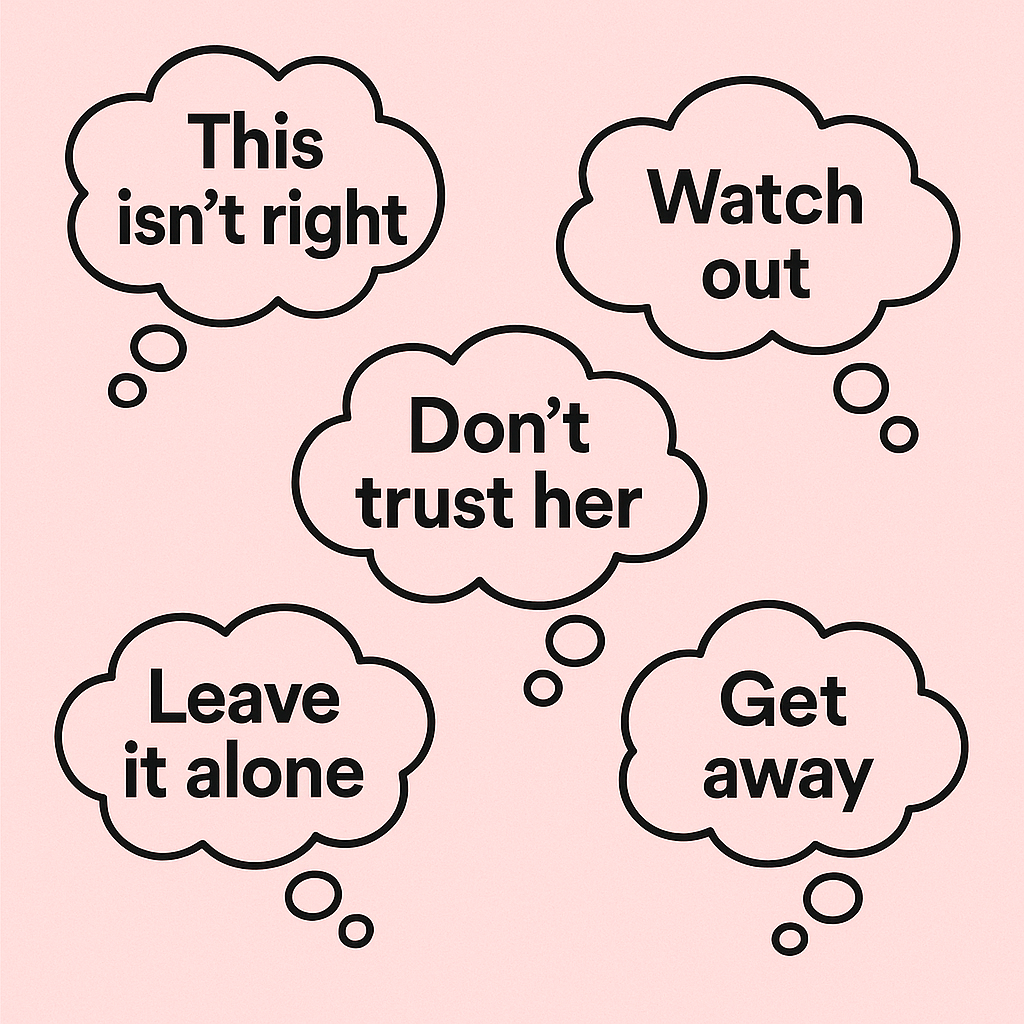
Most people miss these signs because they expect intuition to feel pleasant. They want it to feel spiritual, peaceful, or deep. But your intuition is not trying to be cute or aesthetic. It is trying to keep you safe. When something is wrong, it won’t always feel calm. It might feel like pressure, urgency, irritation, or a shift you can’t easily explain.
Once you stop expecting intuition to feel soft and comfortable, you realize it is different. You start recognizing what your intuition is saying, and life then becomes MUCH easier.
You confuse empathy with obligation
A lot of people ignore their intuition because they don’t want to hurt someone else’s feelings. You see their struggles, you understand their trauma, and you feel bad for them. That’s the part of you that cares, and there’s nothing wrong with that. The problem arises when caring becomes a responsibility for someone else’s emotions or behavior.
When you’re a naturally empathetic person, it’s easy to tell yourself things like, “They didn’t mean it.” You might also think, “They’ve been through a lot.” Sometimes you worry, “I don’t want to piss them off.” So instead of listening to the uncomfortable feeling in your body, you ignore it. You try to protect others’ feelings even when they ignore yours. You try to understand them even when they never try to understand you. Before you know it, you’re putting their comfort above your own safety or peace.
This is how intuition gets silenced. You feel something is off, but you ignore it because you don’t want to look mean or insensitive. You convince yourself you’re being compassionate, but really you’re putting yourself in situations that drain you. Meanwhile, the same people you’re worried about hurting would not protect you in the same way. They wouldn’t offer you gentle treatment if the roles were reversed.
Caring about someone does not mean you owe them access to your time, your energy, or your peace. Once you learn the difference between compassion and obligation, it becomes a lot easier to hear yourself again. Your intuition becomes clear because you’re no longer drowning it out with guilt.
You’ve been taught to explain everything away.
A lot of us grew up being told we were too emotional, too sensitive, or too reactive. Women, in particular, hear that from every direction. When people repeat those messages long enough, you start believing them. So when your intuition sends alerts, don’t trust it. Instead, you try to find a logical reason for what’s happening and ignore your intuition.
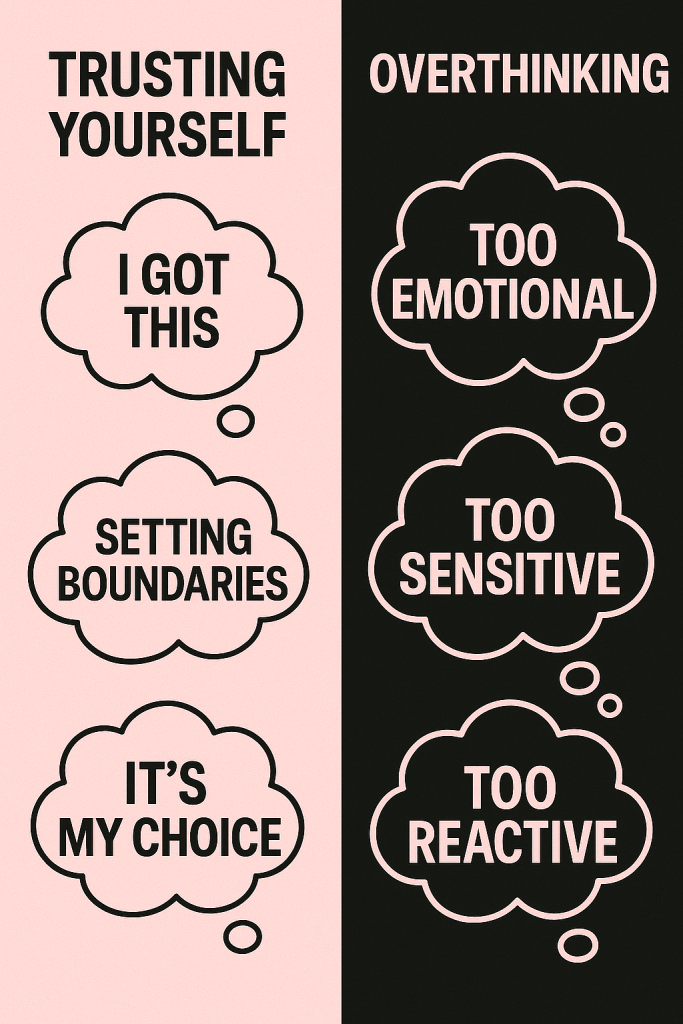
You tell yourself you’re overthinking. You tell yourself you’re reading too much into it. You try to make the situation make sense, even when it doesn’t feel right. You talk yourself out of what you already know and feel.
This is how people lose their connection to their intuition. Not because they don’t have one, but because they learned to overlook it.
The more you ignore your intuition, the quieter it gets. Trusting yourself begins with letting go of the notion that you need a perfect explanation before taking something seriously. Sometimes your intuition is the explanation.
THE HONEST TRUTH
Your intuition can gradually be restored. Somewhere along the way, you just got used to ignoring it.
Once you start listening to yourself without arguing with every feeling you have, things get clearer. You make faster decisions. You waste less time. You stop forcing situations that were already showing signs they weren’t for you.
A simple rule that helps more than people realize. If you have to convince yourself, overexplain, or talk yourself into feeling comfortable, the answer is already no. Your hesitation is the message because your intuition always speaks first.

 Black Sh33p's Corner